

First Chapter : Cell and its Structure
সুপ্রিয় ২০২৪ সালের ইংলিশ ভার্সনের এইচএসসি পরীক্ষার্থী বন্ধুরা, শুভেচ্ছা নিও। আজ তোমাদের Biology first paper (Botany)-এর ‘First Chapter : Cell and its Structure’ থেকে আরও ১টি CQ প্রশ্ন ও উত্তর নিয়ে আলোচনা করা হলো।
3. Read the text answar the questions below.
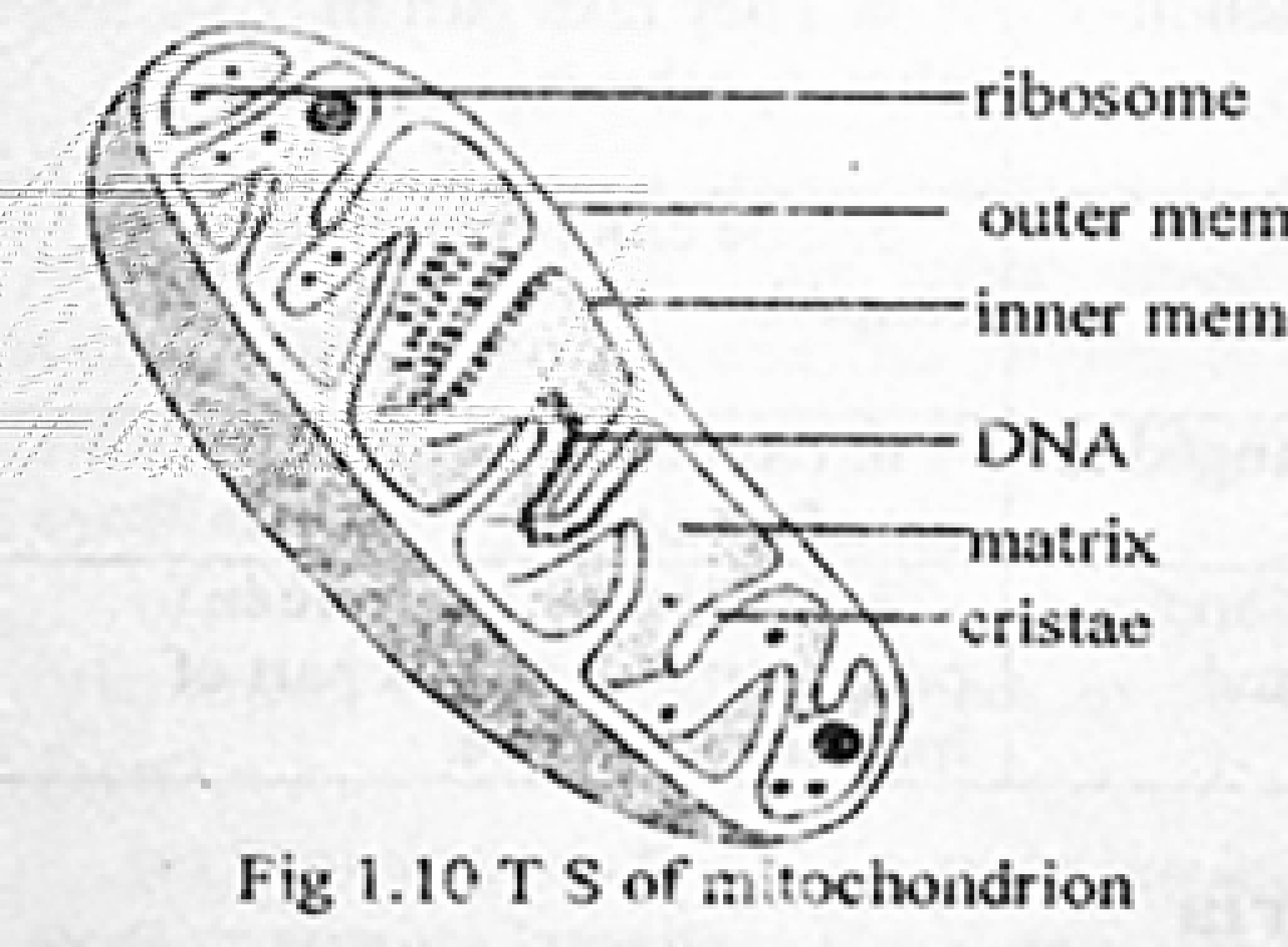
Nucleic acid is two types. One is DNA and other one is RNA. DNA has no types but RNA has different types. Among the different types of RNA one RNA helps to transport amino acid during the protein synthesis.
a. What is tonoplast?
Ans: The thin membrane which is made of protoplasm and surrounds the cell vacuole is known as tonoplast.
b. What do you mean by Choromatin? Ans: Chromatin: The main element of chromosome is chromatin (coloured filamentous body) which is in fact a DNA protein compound. Primarily the filament of the nucleoprotein compound is 11 nm thick which gradually being coiled turns in to 700 nm thick chromatid. The part of the chromatin which remains in more coiled form during the interphase and prophase stage it is called heterochromatin , this part remains inactive in heredity and doesn't take part in mRNA synthesis. The part of the chromatin that is less coiled is called euchromatin. This part remains active in heredity. The large part of this chromosome takes part in mRNA synthesis.
c. Explain the structure of above mentioned RNA. Ans: The above mentioned RNA is t-RNA. The structure of the t-RNA is called the Clover leaf model which is given by Holley and his associates. The structure is explained below-
Transfer RNA (tRNA): The RNA which transfers the amino acid to mRNA molecule in order to help the protein synthesis is known as tRNA. There are about 31-42 different types of tRNA in each cell. tRNA is formed in the nucleus. About 75-90 nucleotides are present in each tRNA. According to Clover leaf model, t-RNA has 5 arms and 4 loops. Arms are- Amino acid arm, T-arm, anticodon arm, Darm and accessory arm. Primarily, each tRNA is single helical and like a long chain but later more than one loop is formed by forming some folds in it. The most useful loop is the anticodon loop which can lie face to face with mRNA codon. tRNA-3' end is single helical and it always follows the ACC arrangement. Amino acid remains attached here. It's called the site for amino acid. Anticodon loop and amino acid site lie on opposite direction. Anticodon is formed by three bases. Base sequence of all tRNA molecule is not same. On the basis of this a definite tRNA activating enzyme determines the definite amino acid. There are 20 separate tRNA activating enzyme for 20 amino acid. tRNA activating enzyme identifies the definite tRNA by the specific size and chemical property of tRNA. ATP supplies necessary energy in the attachment of tRNA with amino acid
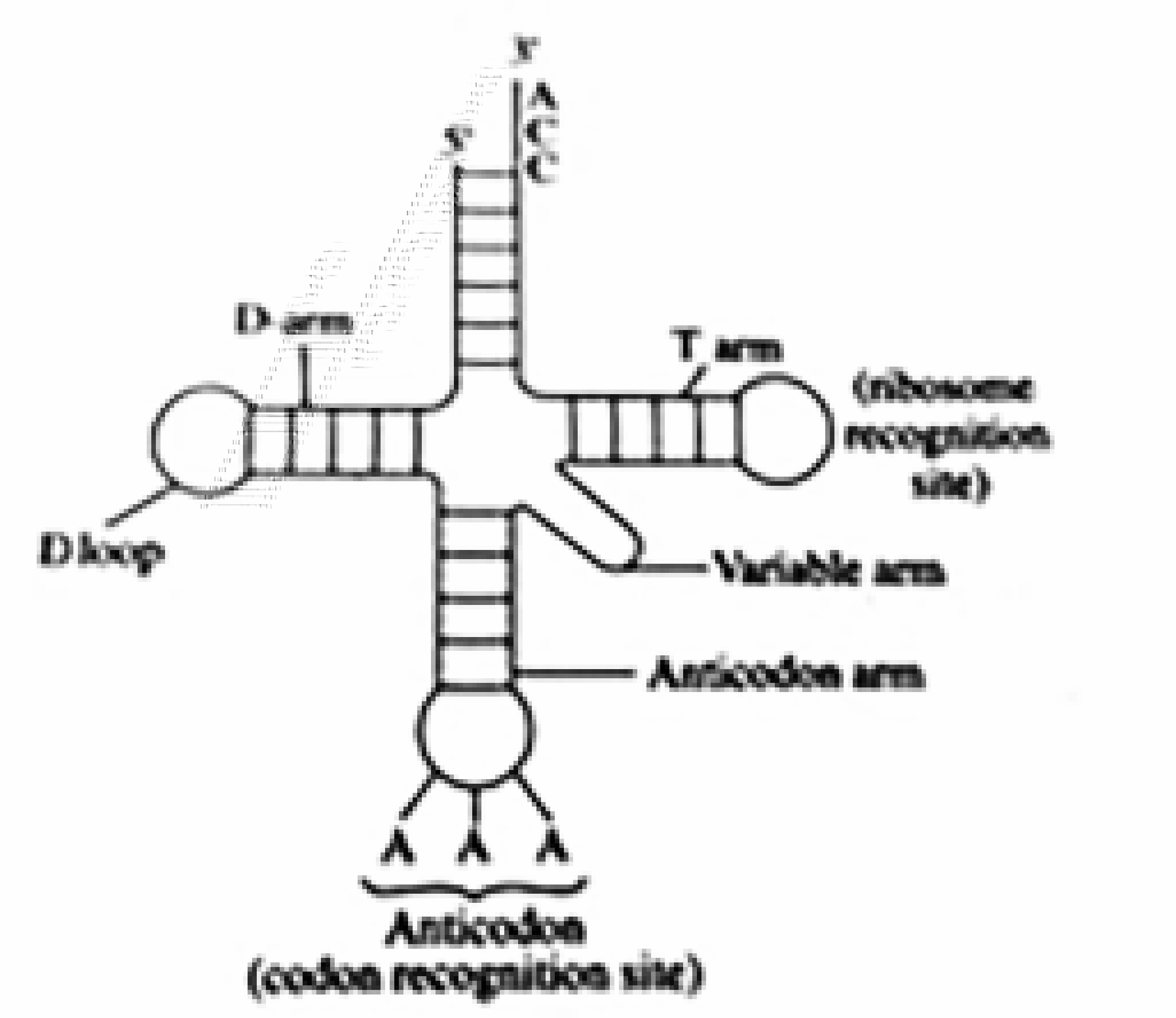
Function: According to genetic code, it transfers amino acid to mRNA molecule during protein synthesis.
d. Discuss how does the aforementioned first nucleic acid make its own copy.
Ans: The above mentioned 1st nucleic acid is DNA. The DNA can make its own copy by replication process. The process is discussed below-
Replication: 1) Replication starts at one on more points in a DNA double helix. The point is known as origin of replication or ori.
2) Helicase enzyme is attached with the ori and starts to unwind DNA double helix by breaking down the hydrogen bonds in between two mitrogenous bases. Due to the separation of two double strands a 'Y' shaped structure is formed at the two ends of ori which is called replication fork.
3) Newly separated strands again want to rewind and re-twist which is prevented by topoisomerase enzyme in case of eukaryotic cell and by gyrase enzyme in prokaryotic cell.
4) As two strands are complementary to each other, hence it wants to form hydrogen bond again. It is prevented by Single Strand Binding Protein (SSBP).
5) Separated each strand acts as template strand now.
6) Now Primase enzyme produces a primer by using some sequences of template DNA. Primer is a short RNA sequence which contains 3'- OH group
7) DNA Polymerase- III starts to attach new nucleotides (complementary) according to the template stand at 3'-OH group of primer.
8) The parental strand which shows continuous synthesis and whose direction towards the replication fork is called Leading strand. And the parental strand which shows discontinuous synthesis and direction is opposite to the replication fork is called lagging strand.
9) At the end of replication, primers are removed by DNA-Polymerase- As a result, small gaps are created between two newly synthesized DNA strands.
10) Many small fragments are found in lagging strands which are known as Okazaki fragments. Finally, they are joined together by Ligase Enzyme.
লেখক : সহকারী অধ্যাপক, জীববিজ্ঞান বিভাগ
আদমজী ক্যান্টনমেন্ট কলেজ, ঢাকা
জাহ্নবী


-1783926384.png)


-1783919798.jpg)


